The LPFM Store has set up hundreds of low power FM and commercial FM radio stations across the United States, and also supports hundreds of other installations in other parts of the world. We can assist you or your organization to start a new Radio Station - either broadcasting on a low power basis, on a commercial full power FM frequency or the internet. If you're interesting in starting up a new LPFM radio station or an FM radio station, you're in the right place!
Nexus is working with Nicom to reduce overstock inventory on the following items. These prices reflect a discount of up to 50% off the normal Nicom price. This is a limited offer available on in stock items only. No credit cards accepted on these deeply discounted items. (CC accepted if you cover processing fees 4%) There are new items carrying the full Nicom warranty.
Made in the U.S.A
Over-stocked items on SPECIAL through the end of October 2012*(or while quantities last)
NT 30
30W front panel programmable Exciter / Transmitter
$1600.00
NT 250
250W front panel programmable Exciter / Transmitter
$3000.00
NT 500
500W front panel programmable Transmitter
$3800.00
TSL910/RSL900
10 W Composite STL System
$4000.00
JUPITER
3-Band Digital Audio Processor with Stereo Generator
$1390.00
POSEIDON
5-Band Digital Audio Processor with Stereo Generator
$3600.00
ATLANTIS
8 Channel Mixer: 6 balanced inputs and 2 phone inputs
$1490.00
BKG 88/2
CP Low Power 2 bay Antenna System
$1090.00
BKG77/2L
2-bay Circular Polarized Antenna System (1000W)
$1590.00
*Note: These prices are subject to change and availability.
May not be combined with any other offer or discount.
Our sales team is here to answer any questions about our products or to help with any other broadcasting need.
The FCC inspector is in the lobby and wants to inspect your station! This can be an extremely stressful situation if you aren’t prepared. Suddenly you envision all the things that you might have neglected by accident or procrastination. But he is here and he is not coming back later. Of course the best course of action is not to procrastinate and make sure your Public File is in order and neatly organized. Make sure your logs are meticulous, but eventually we are all going to miss something.
Beyond planning, there is a bit of insurance broadcasters can put in place to avoid costly fines and embarrassing FCC inspections. Interestingly many stations don’t take advantage of this valuable insurance – a way to make the FCC inspector happily go away or never show up at all.
What is this valuable service that could make such a nightmare simply go away? A sort of rehearsal inspection where you cannot be fined for violations found during the inspection. Many state broadcasters associations have made arrangements with the FCC to not perform random inspections of stations that pass the ABIP inspection for three years. You simply pay your state broadcasters association to inspect your station instead, post the certification, and sleep better.
This is just like an FCC inspection, without the FCC inspector. You will still of course be required to correct any infractions, but they will not be reported to the FCC. Once the infractions are corrected, a certificate of compliance will be issued. In addition to a technical inspection, the association inspector is well trained on matters of the Public File. They will work with you going through the self-inspection checklist, and help you answer the questions properly.
However, if you are operating with blatant violations, with variations from your license – ie, a six bay antenna when you are authorized for four, you can expect a visit from the real FCC inspector. If your transmitter is improperly maintained and wiping out the local EMS, you can also expect a visit from the FCC.
As much as we protect our precious portable devices such as our smart phones, ipods, etc. Sometimes the worst happens – a spill, a drop into a liquid. While this certainly can destroy electronics, as water and electricity don’t play well together, the problem is more one of residue left behind by the liquid. When the worst happens, don’t panic! Follow these steps and you just may save the device from the landfill.
First, quickly remove the battery. The longer current is flowing through the new liquid connections, the more possibility for damage. Next, if there is a SIM card or memory card take that out as well. If you are sure the liquid penetrated the device, gently pour a small of rubbing alcohol into the device. Otherwise wipe off the device with a cloth dipped in the alcohol.
The higher the alcohol content the better. This will help to remove any residue and evaporate the liquid quickly. Be sure to shake out the excess as much as possible – you might use a bit of compressed air here to help. Be sure to wipe all the moisture off of the outside of the device. Now here is the big surprise, place the device (and battery) in a small container of uncooked rice. Use a sealed container and snap the lid in place. Wait till the next day and try out the device. You might be surprised when it functions perfectly.
I have used this method on cell phones and many keyboard spills, so far with 100% success. Of course your results and mileage may vary, but what do you have to lose at this point – it’s likely bricked from your sugary soda or coffee otherwise. Some devices can take more time to dry, so the longer you can leave the device in the container the better. Next time be more careful, but when it happens you now have a bit of knowledge that just may save your device from the trash.
A blown tower light is not only dangerous to aircraft it can result in a serious fine for the tower owner. Therefore it is imperative to make it a regular task to check your tower lights and make a log entry. If a tower light is out, the tower owner is required to notify the FAA. This will create a Notice to Airmen (NOTAM). This notice is available to all pilots and the FAA’s NOTAM phone service, 800-WX-BRIEF.
Previously you would call the local FAA center to report the outage. Times are a changing and now, while some centers still accept calls, many are finding the phone numbers they have no longer work. The new procedure is to contact the NOTAM hotline at 877-487-6867 which will in turn route you to the proper flight center.
You will need some key information when you call NOTAM, such as the tower registration number. If you are not sure of the tower number, generally it is on the tower fence or building, and you should also be able to find it on your license – it is required to be posted at the tower location. Be sure to write down the reference number the operator gives you. It is best to describe the outage in your log.
Once you have notified NOTAM, the report will be good for 15 days. If you are unable to make the repairs during this time, you need to submit a new NOTAM report.
If you would like to verify your NOTAM or check a NOTAM for a specific tower you can do this on-line at https://pilotweb.nas.faa.gov/ distribution/home.html. Enter the airport code preceded by a k. Ie; Dallas/ Fort Worth Airport would be kdfw. Where do you find the airport code? It is also available on-line at http://www.airnav.com/airports/search.html
A few minutes each week checking the tower lights and keeping a detailed log will keep aircraft out of harms way and keep your tower in compliance. Another good addition is an alarm system for your lights.
Here is a simple procedure for laying out a method to illustrate Power db gain (or loss), and is easy to perform and easy to remember (both of which are key points). While doing this we can see a little bit of what a "logarithm" is. Simply stated for this instance, we find that the "multiplication factor", as it relates to the "db-gain". i.e. Where the db values increase in a "straight-line", we find that the related "multiplication factor" increases radically (actually "logarithmically"), by basically doubling every 3 db. If we lay out a simple table of just 2 columns, identified first as db gain, and secondly as "Factor (multiplier)", we can begin this simple and understandable task.
The way we do this, is to first establish that 0 db has a "Gain Factor" of 1 (which we will later explain why). ..Next, we need to double the "Gain Factor" for every increase of 3 db. This "doubling" is in essence is one example of a "logarithmic increase in value"... A key point here is that these db gains and their respective "Gain Factors" are actually a continuous circle, where the 10 db restarts at the bottom with the same 0 db, but the "Gain Factor" has increased by 10 times.
Let's start out and see how easy this really works: ... The doubling of the "Gain Factor" from x1 to x8, from 0 db to 9 db in 3 db steps, is pretty straightforward... Adding 3 db to the 9 db would give us 12 db, which when "rolled over" on the chart (where 10 db is represented as 0 db at the bottom), 12 db would be on the chart as 2 db (like 10 db + 2 db).
What happens is that the dbs roll over by simply adding, so that 11 db (which is simply 1 db more than 10 db) is shown as 1 db above 0 db. .. The next "db rollover" would result in 19 db + 1, or ... 20 db!! .. To illustrate this, note that where going db (where we had a "Gain Factor" of x8), 3 db more takes us to the 2 db point (i.e. 9 db + 3 db = 12 db, as 2 db above the 0 db)... Since doubling 8 would give us 16, but rolling over on the chart increases our "Gain Factor" by x10, we can illustrate the 16 as 1.6 instead...
Those relationships are simply accomplished by scientific notation, where a "Gain Factor" of x16 can be expressed as 1.6x101, and a "Gain Factor" of x21.25 would be expressed in scientific notation as 2.125x101.
The simplest process for converting db gain to a "Gain Factor", is to strip off the numbers that precede the "basic 1 figure db", use that basic 1 figure db as from the chart, and the number(s) preceding that "basic 1 figure db" as the power of 10.
This means that an antenna which has a 14 db gain would mean (taking the basic 4 db = x2.5 from the chart) that our antenna has a power gain of 2.5x10+1, ... i.e. 25 times... The thing to remember is that where the dbs roll over by adding, the "Gain Factor" however increases by 10 times, each time that "rollover" occurs.
Think of it like an Odometer (like xxxx.n) where the ".n" represents the "db gain" in each of the Tables below. In that Odometer, when the ".n" goes from ".0" to ".9", and then 0.1 or 0.3 more, we would expect the next number in the adjacent column to pump up by "0.1" or "0.3" above the "0.9". So... 0.0 increasing to 0.9, and then "0.3" more would cause the "0.9" to become "1.2"...... Keep all that in mind as we present these 3 Tables.
Table #1
Db Gain
Factor (x)
.
.
9
8
8
.
7
.
6
4
5
.
4
.
3
2
2
.
1
.
0
1
Table #2
Db Gain
Factor (x)
.
.
9
8
8
6.4
7
.
6
4
5
3.2
4
.
3
2
2
1.6
1
.
0
1
Table #3
Db Gain
Factor (x)
10
10
9
8
8
6.4
7
5.0
6
4
5
3.2
4
2.50
3
2
2
1.6
1
1.25
0
1
The reason for the 0 db = 1 , is that any number to the "0" power is equal to "1".
.. Think of it this way, everyone knows that 22 = 4, and 23=8. .. But also note that as this process is reversed, we find that 21=2, and 20=1 !!
Examples:
.... An antenna with a given Power Gain of 5 db and driving it with 15W, means that it would have a "Power Gain Factor" of x3.2, resulting with effectively the same as driving with 48W.
Special Note #1: ... This Process is actually the result of numerical descriptions of the resulting values of powers of 10, ranging from 0.0 to 1.0 in 0.1 steps, where 0 db is actually 100.0 = 1. Continuing this process, we find that 100.1 = 1.25 ..... 100.3 = 2.0 .... 100.5 = 3.16 ... ....100.7 = 5.0 ... [ note that 7 db correlates to x5 as a "Gain Factor"]
Special Note #2: ... In the opposite way of looking at this, we would say that the "log of 5.0 = 0.7", as the necessary power of 10 required to result in the 5.0.
.... A Linear Power Amplifier that has a 550W output if driven with 15W, has a "Power Gain Factor" of 36.7. Using scientific notation, this is expressed as 3.67x101. We find this approximately at 5.6 db on the chart, and by adding the x101) to the db we get 15.6 db as the Power Gain (i.e. 5.6 db + 10 db).
When folks use a calculator, it's easy to get confused as to whether to find the "log" of the number in question, or the "anti-log" or "inverse-log". .. By using this chart method (with scientific notation), it's hard to go wrong. But... "Practice helps a lot!".
Nexus Broadcast is back! Leo has re-opened the engineering firm and will now be known as Mutual Broadcast.
Soon a new filing window will be open for new FM radio stations! Leo had suffered a few heart attacks in 2015 forcing him to cut back severely on professional obligations. It was a sort of forced Retirement at the time. The good news is, he is feeling fine and has grown quite board with the retirement! He is re-launching services for new licensing, upgrades, renewals etc. Our new site is MutualBroadcast.com.
The new site is being updated with the latest news and information regarding the future window and other pertinent FCC and broadcaster news. Be sure to make note of the new website and check back often to avoid missing the new FM radio filing window.
—————————————————- —————————————————
Nexus has set up hundreds of non-commercial and commercial FM radio stations across the United States. We also support hundreds of other installations in other parts of the world. We can assist you or your organization to start a new Radio Station, prepare and file FCC engineering applications for upgrades and new licenses. We can perform detailed studies to determine upgrade potentials for your existing station. Assistance is available for petition preparation, petition responses, enforcement response or just consulting on any broadcast related issue.
Experienced Broadcasters and Engineers Make the Difference!
We are broadcasters ourselves, enabling us to offer unparalleled support through all the stages of building and operating a radio station. Nexus offers complete service to help you start up a licensed FM, AM or Low Power FM radio station in the United States, or anywhere else in the world for that matter. We can take care of the entire project – from licensing with the FCC to determining the best studio and antenna location, supplying all the equipment for the station, setting up the radio automation software, installing the studio equipment, to providing training on how to use all the equipment. Simply stated – we help you with starting an FM radio station from start to finish! Nexus Broadcast really is your one stop source for all broadcasting related needs. Check around, you’ll find we have a solid reputation in the broadcasting community. Broadcasting Outside the box since 1985!

 Made in the U.S.A

 Over-stocked items on SPECIAL through the end of October 2012*(or while quantities last)

 The higher the alcohol content the better. This will help to remove any residue and evaporate the liquid quickly. Be sure to shake out the excess as much as possible – you might use a bit of compressed air here to help. Be sure to wipe all the moisture off of the outside of the device. Now here is the big surprise, place the device (and battery) in a small container of uncooked rice. Use a sealed container and snap the lid in place. Wait till the next day and try out the device. You might be surprised when it functions perfectly.
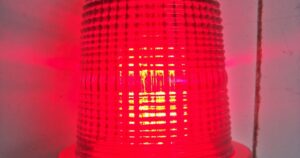 You will need some key information when you call NOTAM, such as the tower registration number. If you are not sure of the tower number, generally it is on the tower fence or building, and you should also be able to find it on your license – it is required to be posted at the tower location. Be sure to write down the reference number the operator gives you. It is best to describe the outage in your log.
 Nexus Broadcast is back! Leo has re-opened the engineering firm and will now be known as Mutual Broadcast.
 We are broadcasters ourselves, enabling us to offer unparalleled support through all the stages of building and operating a radio station. Nexus offers complete service to help you start up a licensed FM, AM or Low Power FM radio station in the United States, or anywhere else in the world for that matter. We can take care of the entire project – from licensing with the FCC to determining the best studio and antenna location, supplying all the equipment for the station, setting up the radio automation software, installing the studio equipment, to providing training on how to use all the equipment. Simply stated – we help you with starting an FM radio station from start to finish! Nexus Broadcast really is your one stop source for all broadcasting related needs. Check around, you’ll find we have a solid reputation in the broadcasting community. Broadcasting Outside the box since 1985!